
Research Summary
-
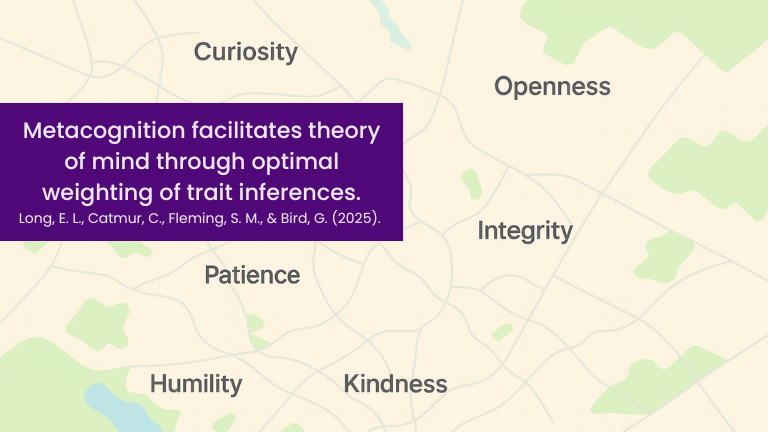
Metacognition facilitates theory of mind through optimal weighting of trait inferences
They found that our confidence in a judgment is shaped by how similar we think the other person is to ourselves… and how well we actually know ourselves. So the idea that, “I know what he’s thinking, he’s just like me!” can be misleading if my self-perception is inaccurate. In that case, I might feel…
-
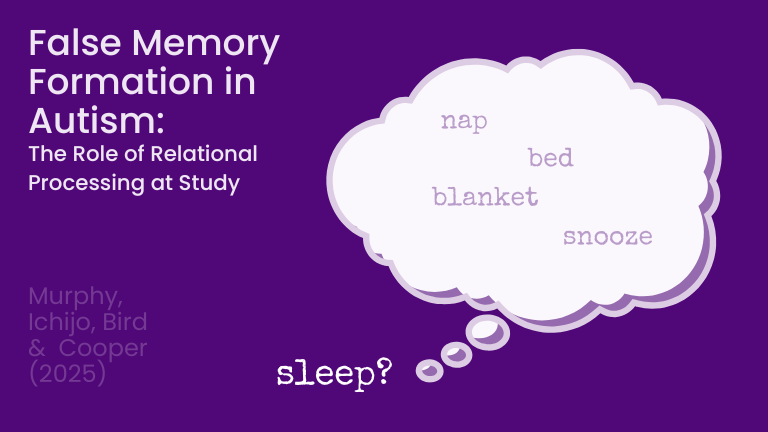
False Memory Formation in Autism:
This study looked at how autistic adults form false memories—when someone remembers something that didn’t actually happen. They wanted to find out if autistic people are more or less likely to make false memories compared to non-autistic people, and what might explain any differences. They used a well-known memory test (called the Deese-Roediger-McDermott task -…
-

‘It just feels unnatural being here’: Autistic secondary school students’ experiences of sensory sensitivities in the school environment
While prior research has examined the sensory impact of school environments, until now few studies have directly considered autistic students’ own perspectives on how sensory differences affect their wellbeing, energy, and learning. This study brings to the front those lived experiences to better understand what school feels like from the inside out.
-
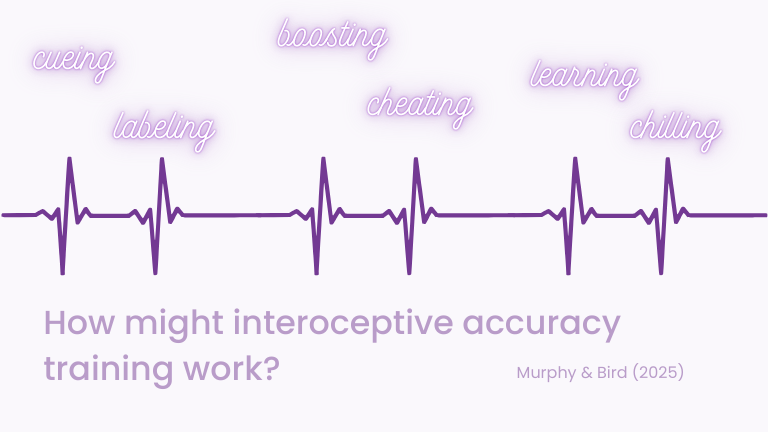
How might interoceptive accuracy training work?
With the growing interest in apps and wearables that claim to be able to help us to learn how to improve our awareness of our own bodies’ signals, Murphy & Bird consider whether these claims can stand up. Evidence of better scores after training might not be about better awareness of our bodies. It could…
-
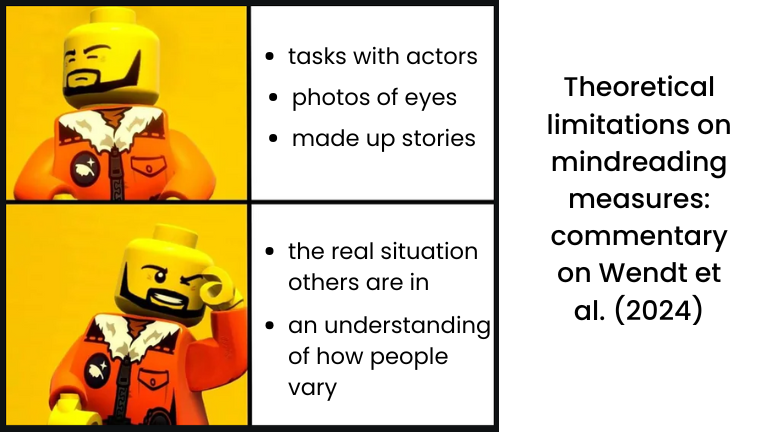
Theoretical limitations on mindreading measures: commentary on Wendt et al. (2024)
This paper sees potential problems with traditional ToM tests by identifying the types of skills that are necessary for ToM judgements. Often, as psychologists, we are attempting to design experiments provide measurement for one skill without influence from other processes. With ToM doing this is difficult (maybe even impossible!) because there might not be a…
-
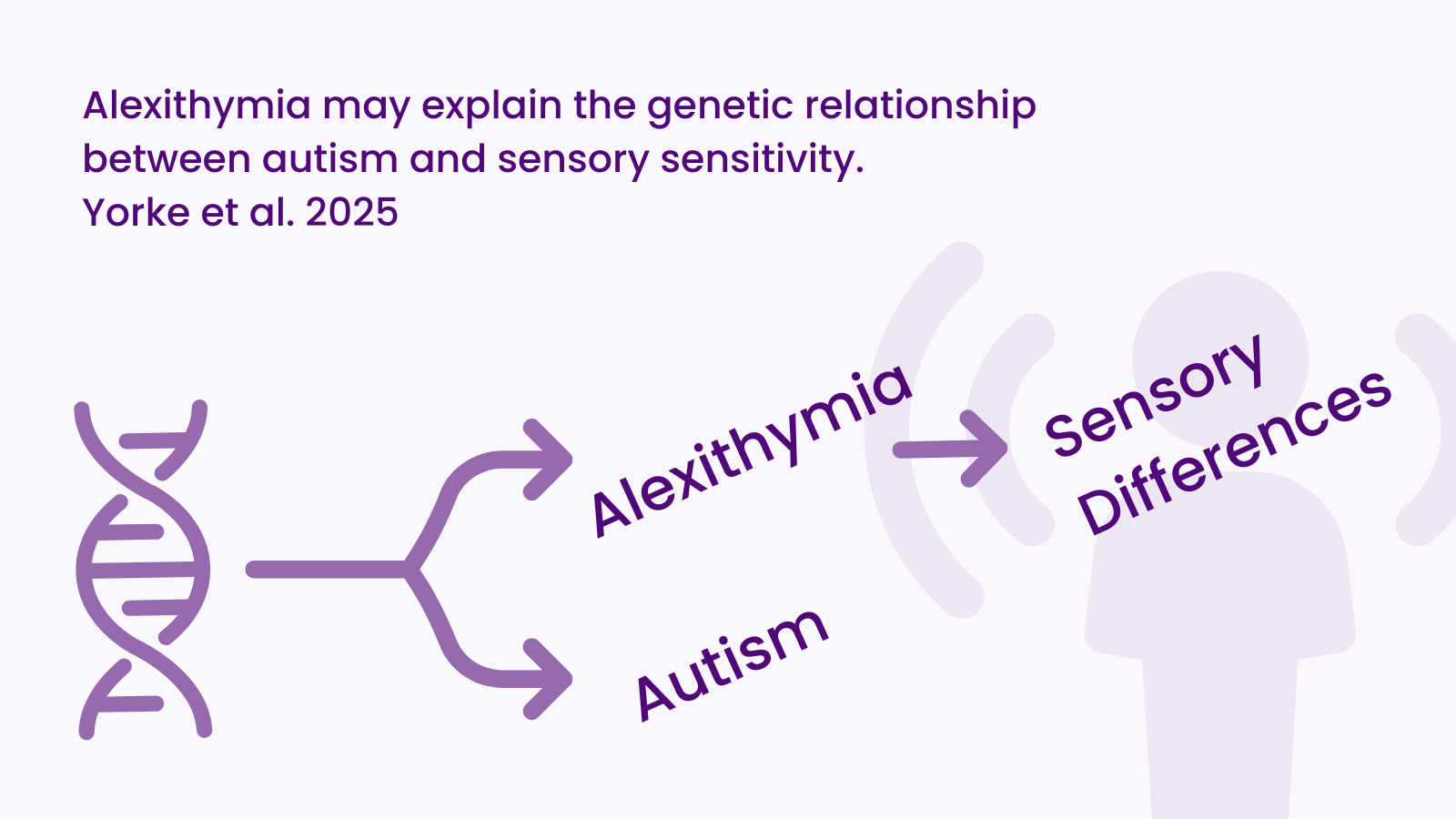
Alexithymia may explain the genetic relationship between autism and sensory sensitivity.
This paper suggest that alexithymia – not autism – might explain some of the variability in sensory experiences among autistic people and beyond. The study used parent-reported data from adolescent twins to explore genetic relationships between autism, alexithymia, and sensory symptoms. The team found that genetic link between autism and sensory symptoms disappears when alexithymia…
-
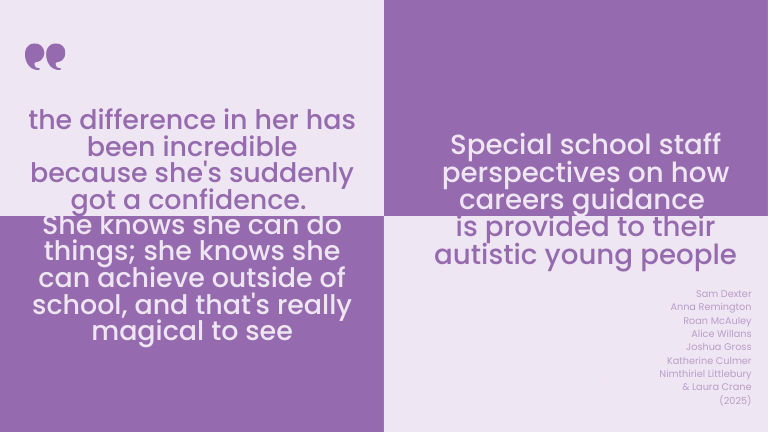
Special school staff perspectives on how careers guidance is provided to their autistic young people
The team looked at how careers guidance is provided to autistic pupils in special schools in England. Careers guidance helps young people move from school into work, and schools must offer this support by law. Researchers asked staff in 103 special schools across England to fill out a survey about what careers support they provide.…
-
Experiences of interoception and anxiety in autistic adolescents
A reflexive thematic analysis Kiera Adams, Jonahs Smith, Mary Brown, Geoff Bird, and Polly Waite (2025) research gate We all know the feeling: your heart races before a big event, your stomach twists with nerves, and your hands feel clammy when you’re anxious. But what if you couldn’t recognize these signals? Or worse, what if…
-

Who Tweets for the autistic community? An NLP-driven investigation
An analysis of more than 5 million tweets created a huge data set that could be investigated. It allowed a statical test to be run to see the similarities between what autistic people write, what their parents write, what is written by autistic self-advocacy groups, and what is written by autism advocacy groups that autistic…
-

The theory of mind hypothesis of autism: A critical evaluation of the status quo.
For several years the Theory of Mind (ToM) hypothesis has been suggested as an underlying mechanism for understanding autism. It finds that no existing models fully explain ToM in autism. So, the team introduce the Mind-space framework. Problems with the current Theory of Mind hypothesis: • Describing and explaining ToM differences in autism is quite…