
Research Summary
-
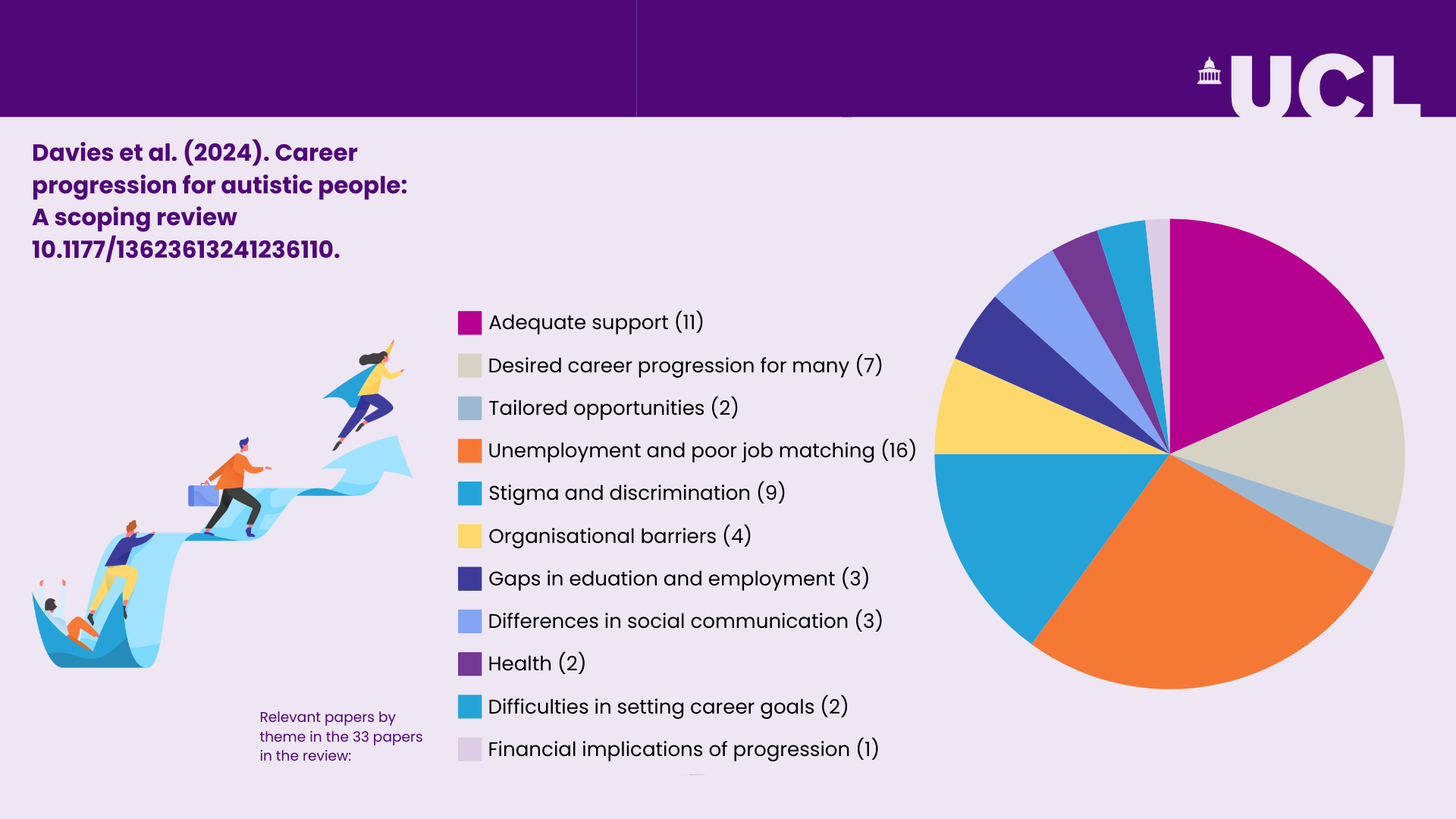
Career progression for autistic people: A scoping review
A systematic review of exisiting literature. Relevant papers by theme in the 33 papers in the review: Adequate support (11) Desired career progression for many (7) Tailored opportunities (2) Unemployment and poor job matching (16) Stigma and discrimination 9) Organisational barriers (4) Gaps in eduation and employment (3) Differences in social communication (3) Health (2)…
-
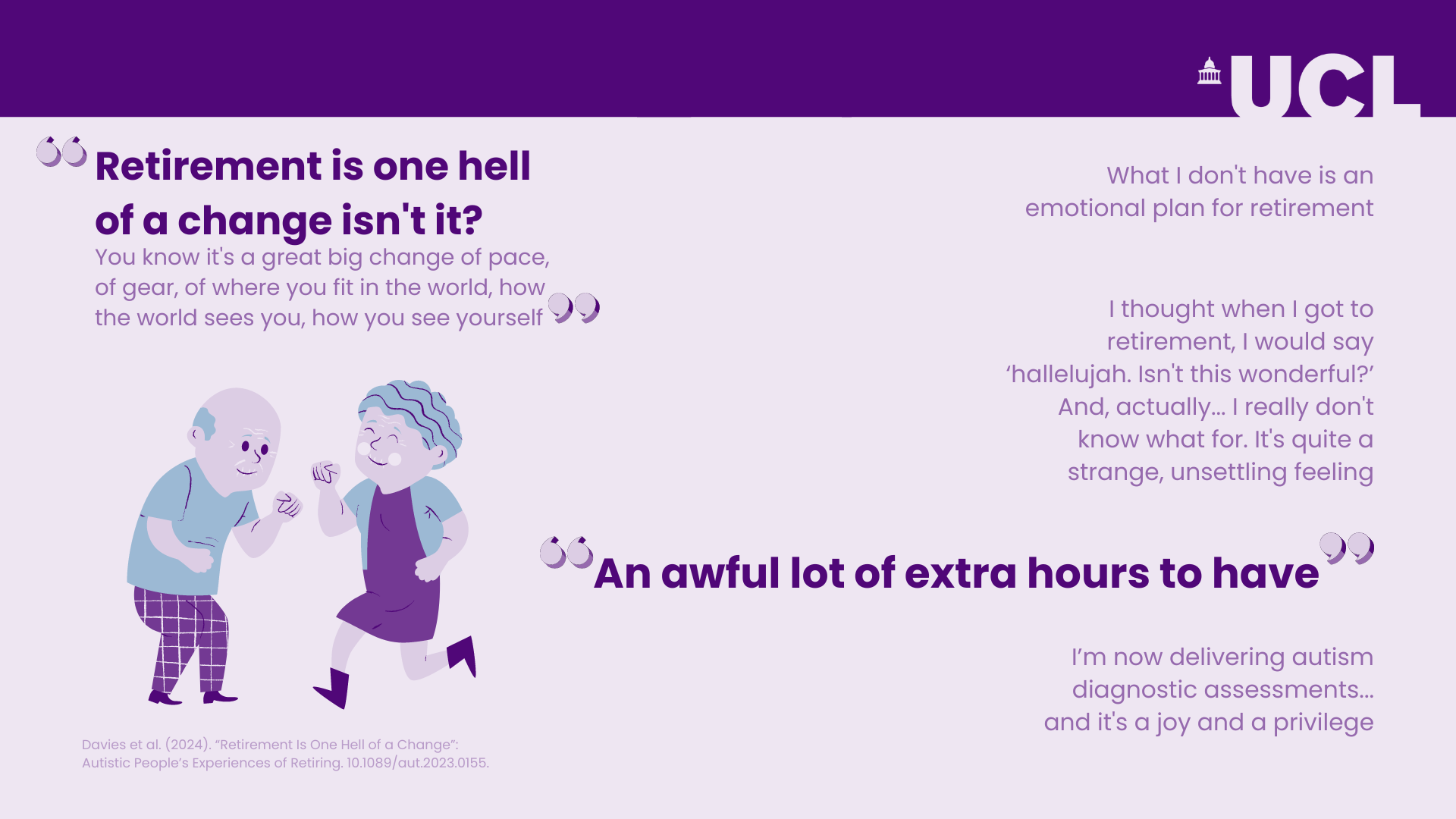
“Retirement Is One Hell of a Change”: Autistic People’s Experiences of Retiring.
“Retirement is one hell of a change isn’t it?” – “You know it’s a great big change of pace, of gear, of where you fit in the world, how the world sees you, how you see yourself” – “What I don’t have is an emotional plan for retirement I thought when I got to retirement,…
-
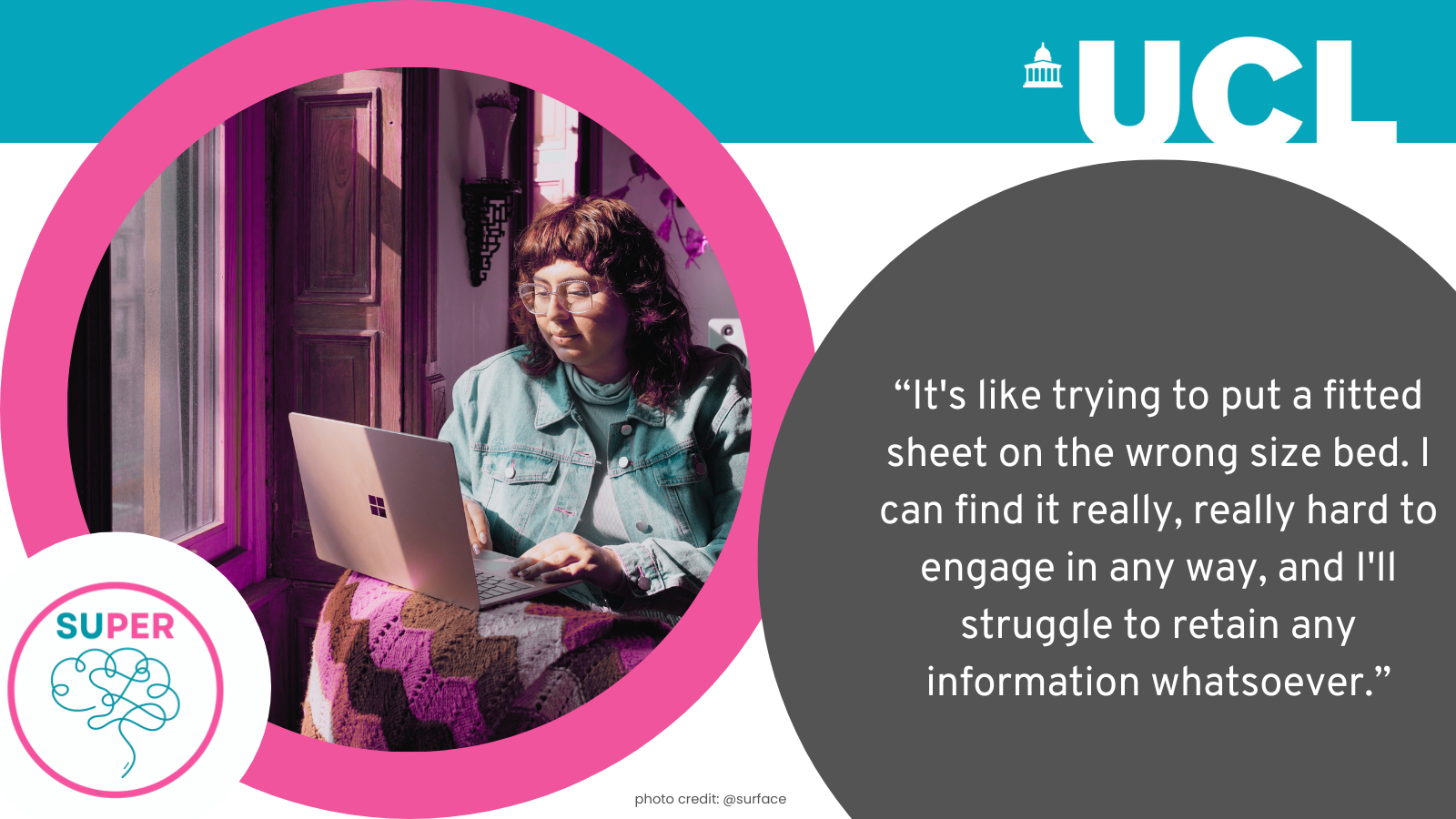
‘A storm of post-it notes’: Experiences of perceptual capacity in autism and ADHD
A large accessible survey was designed by a neurodiverse group of researchers to find out about focus and distraction. It was shared with autistic adults, adults with ADHD, autistic adults with ADHD and a group from the predominant neurotype (PNT). Five main themes were identified through a thematic analysis by a neurodivergent team:
-
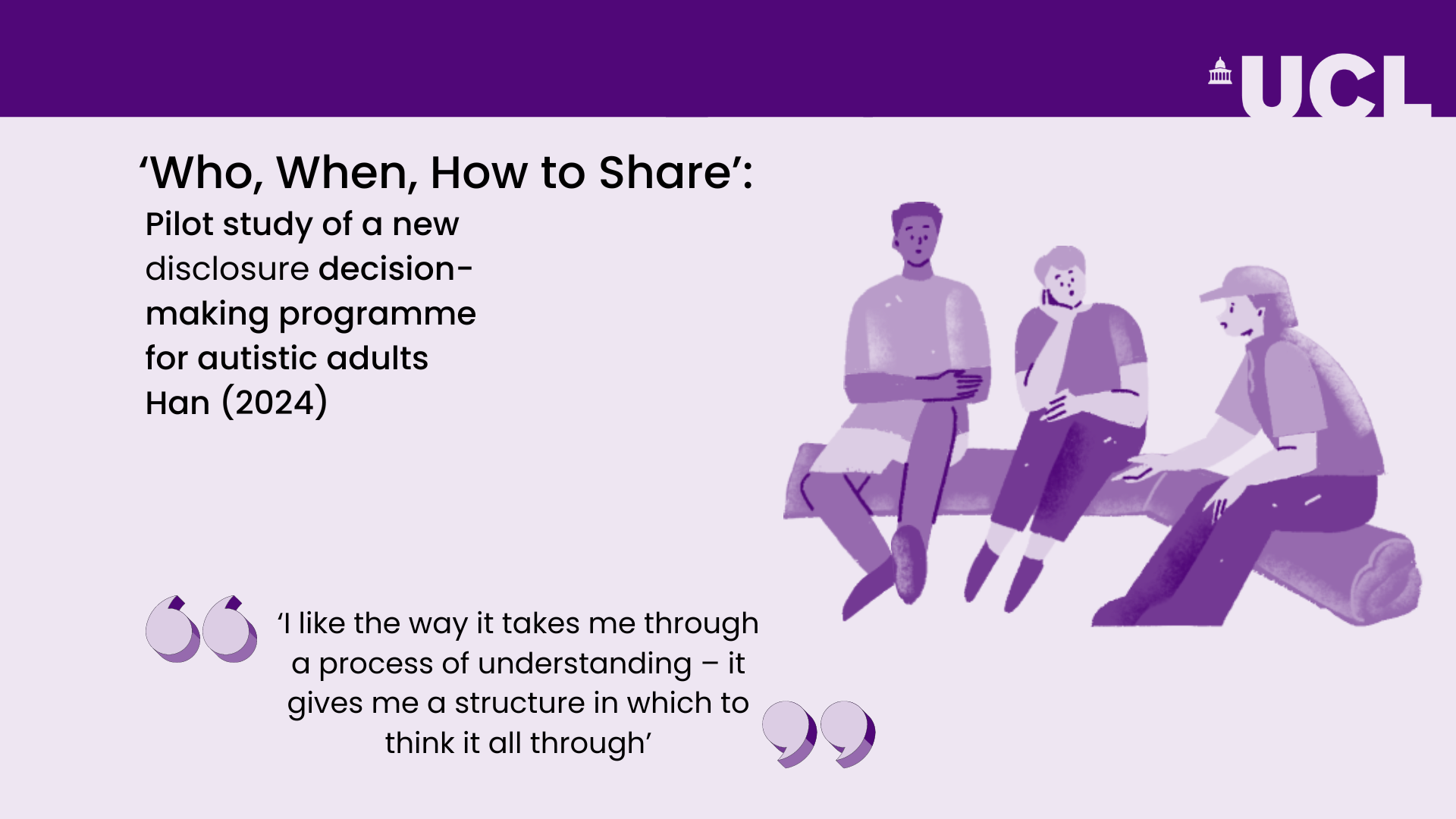
‘Who, When, How to Share’: Pilot study of a new disclosure decision-making programme for autistic adults
Autistic adults often face a dilemma of whether and how much to conceal or reveal about their autistic identity. Disclosure can lead to understanding and support, but also judgement and discrimination. This study looks at a new programme for autistic adults adapted from the Honest, Open and Proud (HOP) programme. HOP is a peer-led group…
-

Autistic identity: A systematic review of quantitative research
A positive Autistic identity has a part in wellbeing. This systematic review of 20 papers explores this. It shows that support and autism acceptance from family and friends contribute to a more positive Autistic identity. Individual factors (e.g., age, gender) seem to have little impact on Autistic identity, meaning broad support might be needed, rather…
-
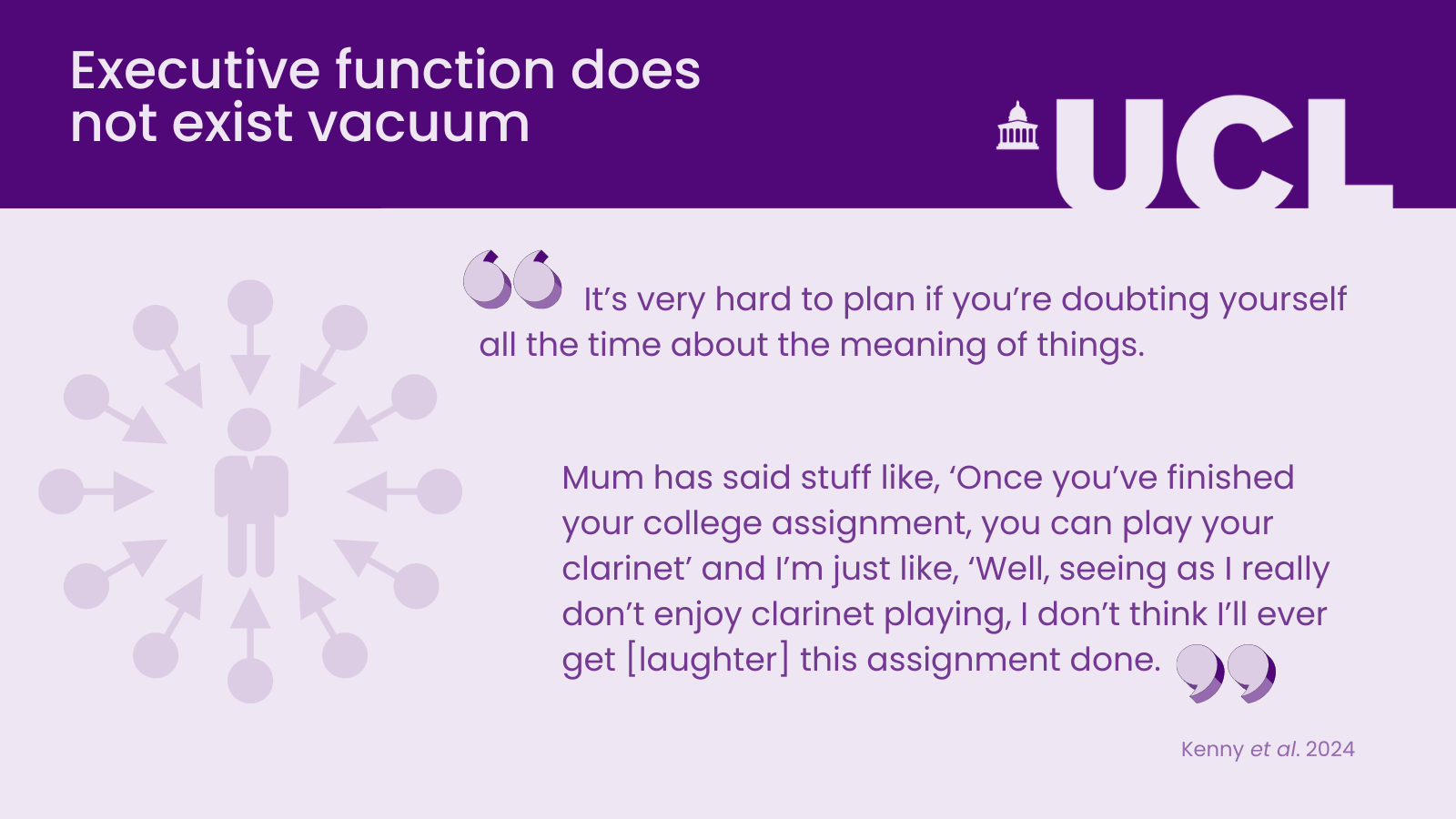
Everyday executive function issues from the perspectives of autistic adolescents and their parents: theoretical and empirical implications
Executive function is a group of skills including planning, inhibition and switching between tasks. Autistic people report struggling quite a lot with these skills. But, when researchers test these skills in the lab, they do not tend to find such big difficulties. This paper, led by former CRAE PhD student Lorcan Kenny and former CRAE…
-

Evaluating measures to assess loneliness in autistic adults
Questionnaires exist to assess loneliness, but do they apply to autistic adults? A study with 203 autistic adults in the UK explored this, using two questionnaires: the UCLA Loneliness Scale 3 and the SELSA (Social and Emotional Loneliness Scale for Adults). Participants shared their experiences of these scales and directly reported how often they felt…
-
The transition to adulthood for autistic young people with additional learning needs: the views and experiences of education professionals in special schools
This paper gauges the insights of staff in special schools. The findings highlight that time constraints and a lack of effective methods for engaging autistic pupils hinder the proper implementation of the Act’s principles. Participants called for greater investment in staff training, more flexibility in schools, and better vocational opportunities for autistic young people with…
-

Autistic young people’s experiences of transitioning to adulthood following the Children and Families Act 2014
The paper voices the experiences of 80 autistic young people aged 16-25 years. Findings were mixed, pointing out that the type of schooling plays a significant role in the access to appropriate support. Nevertheless, the importance of parental advocacy and key ‘champions’ like understanding teachers was unanimously acknowledged.
-
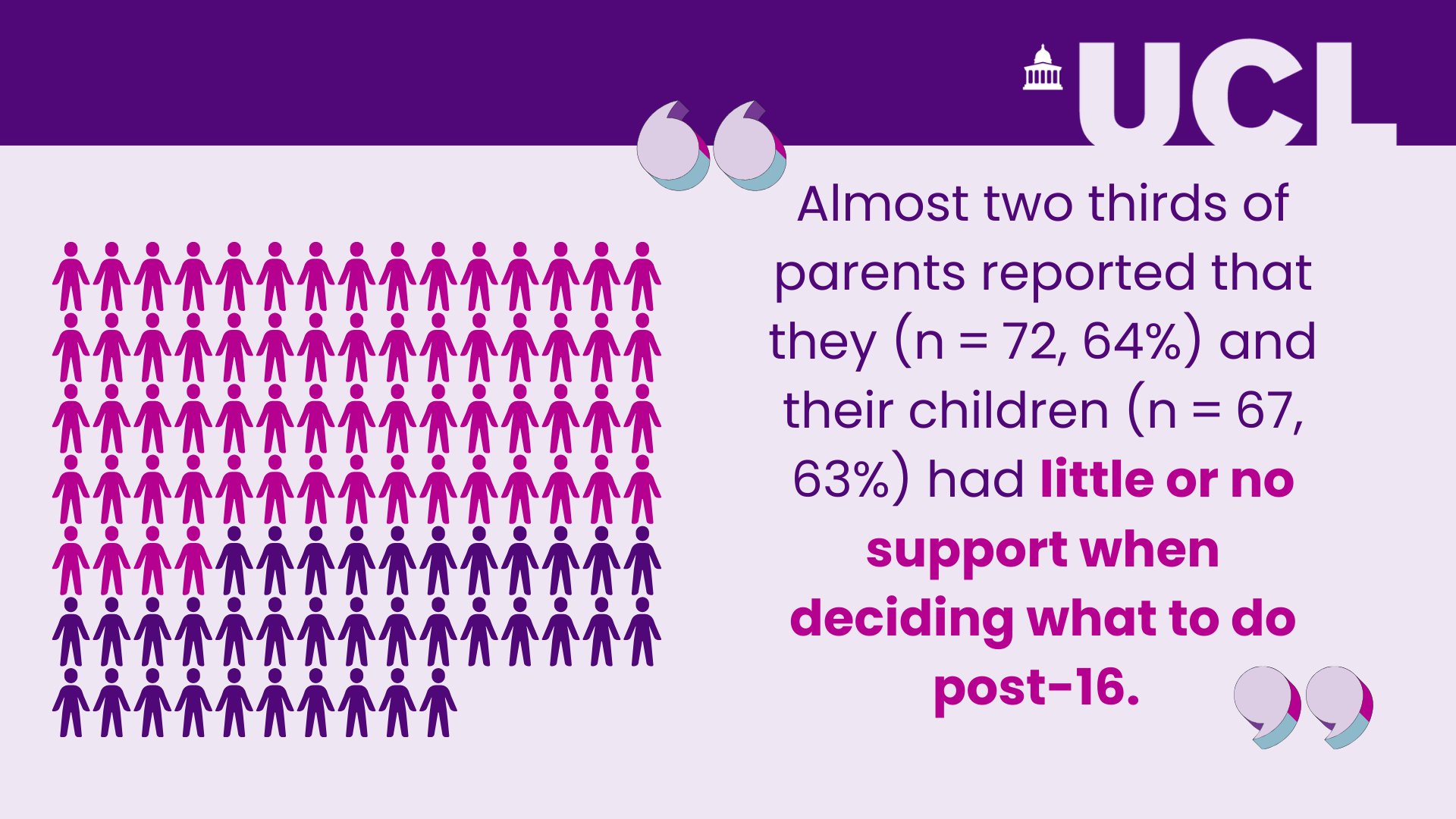
‘I can’t say that anything has changed’: parents of autistic young people (16–25 years) discuss the impact of the Children and Families Act in England and Wales
Despite hopes of better support systems and outcomes, the consensus was that little had changed. Parents noted limited support as their children navigated the challenges of transitioning to adulthood. Alongside two further studies, what becomes overwhelmingly clear is the chasm between policy and lived experiences. While the Children and Families Act aimed to offer a…